The Tragic Demise of Japan’s Constitutional War Constraints

Published a chapter entitled “The Tragic Demise of Japan’s Constitutional War Constraints,” the in an edited volume, The ‘Pacifist Principle’ in the Italian and Japanese Constitutions in the Wake of the War in Ukraine, Giovanni Cavaggion ed., (Springer, 2026), which came out of the conference at the University of Milan last year. The full chapter is available on SSRN, and the abstract is below:

Article 9 of the Constitution of Japan famously prohibits the use of force and the maintenance of armed forces and “other war potential.” For seven decades this provision effectively shaped national policy, constraining the government from any use of force and, to a lesser extent, moderating Japan’s national security posture. It also helped define Japan’s postwar constitutional identity. This chapter examines the process and implications of how Article 9 has been illegitimately undermined over the last decade.

First, it explains the traditional understanding and effective operation of Article 9, from its first authoritative interpretation in 1954 through 2014. Second, it analyzes the Abe administration’s process of “reinterpretation” in 2014–2015, which gutted the clear and effective constitutional constraint on the use of force in paragraph one, and explains why this was not a valid informal amendment but an unconstitutional circumvention of the formal amendment procedure. Third, it examines how Russia’s 2022 invasion of Ukraine was used as an opportunity to complete the evisceration of Article 9, with a new national security strategy that entrenched the reinterpretation and sidelined the less effective prohibition on armed forces and other war potential.

The chapter closes with reflections on the tragic nature of this demise: Article 9 was a unique experiment in constitutional incorporation of international law constraints on the use of force. Its illegitimate subversion is significant not only for constitutionalism and the rule of law in Japan, but for the broader project of subjecting state use of force to meaningful legal limits—at a time when that project is under increasing strain internationally.
New Substack – Law in Crisis

I have launched a new substack, entitled Law in Crisis, which some might find interesting. As the masthead explains, it is a forum for “musings on how law can help our response to crises, and how to respond to the crisis in law itself – use of force and armed conflict, climate change and security, AI and security, constitutional and int’l human rights, and the rule of law more generally.”  The plan is to publish an essay of between one to two thousand words at least once a week.

Geoengineering Wars and Atmospheric Governance

Published my latest article, written with Scott Moore of UPenn, “Geoengineering Wars and Atmospheric Governance,” in the The Harvard International Law Journal. A copy can be downloaded from SSRN here. Here is the abstract:

The increasingly harsh and unevenly distributed heat-related harms caused by climate change, together with frustration over the collective inability to respond to the crisis, are likely to make unilateral geoengineering efforts increasingly attractive. Stratospheric aerosol injection (“SAI”) is a form of solar radiation modification that is effective, technically feasible, and within the financial means of many states and even non-state actors. Yet, there are virtually no global governance structures in place to specifically regulate such activity, and existing international law would provide only weak constraints on unilateral SAI efforts. These features create incentives for unilateral action in what is known as a “free driver” problem: few constraints on a unilateral action that has low direct cost combined with immediate direct individual benefit despite widely distributed risks and indirect costs.

There would be significant collateral environmental and climatic harms associated with SAI. That, coupled with the high risk of unilateral action, is reason enough for both caution and stronger governance. But another risk posed by any unilateral SAI effort—one that is underappreciated and under-theorized—is that of armed conflict. We explore how and why states would likely perceive the potential risks associated with unilateral SAI effort as constituting a threat to national security, and in the absence of adequate legal and institutional mechanisms to constrain such unilateral action, might well contemplate the use of force to defend against the perceived threat. The Article explores and explains how and why the jus ad bellum regime is unlikely to prevent states from engaging in unauthorized use of force against unilateral SAI actors. (click “read more” below for full abstract).

Read more

Discussing Kursk on Asymmetrical Haircuts: The International Justice Podcast

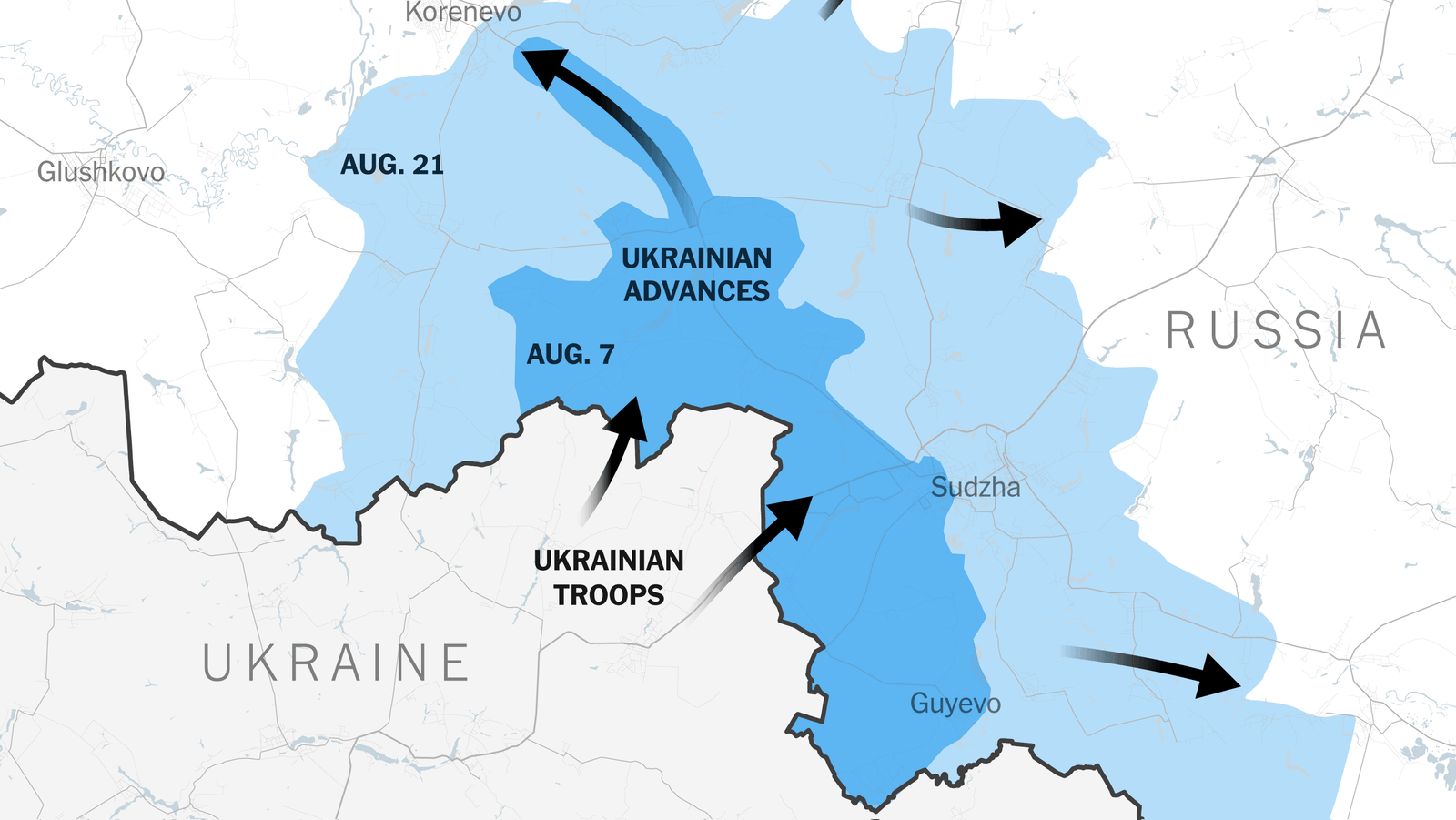
It was a pleasure to be a guest on Asymmetrical Haircuts: The International Justice Podcast, to discuss the legal issues implicated by the Ukrainian incursion into the Kursk region of Russia in August of 2024, in the episode “Justice Update – Ukraine (Almost) Joins the ICC, and Invades Russia,” Sept. 6, 2024.